Key takeaways
- December and January both average about 11 knots over 24 hours, mostly from the north-northwest. Kiteable days happen every week, but not every day.
- Days are mild (about 20–23 °C), nights cool to 10–16 °C, and the sea is about 22–24 °C. Rain is very rare.
- The sun sets around 16:50–17:00 in December and moves to about 17:25 by the end of January. Plan sessions for late morning and early afternoon.
- Book a full week, wear a 4/3 mm wetsuit and bring warm clothes for the evenings. Bigger kites and foils are your friends in winter.
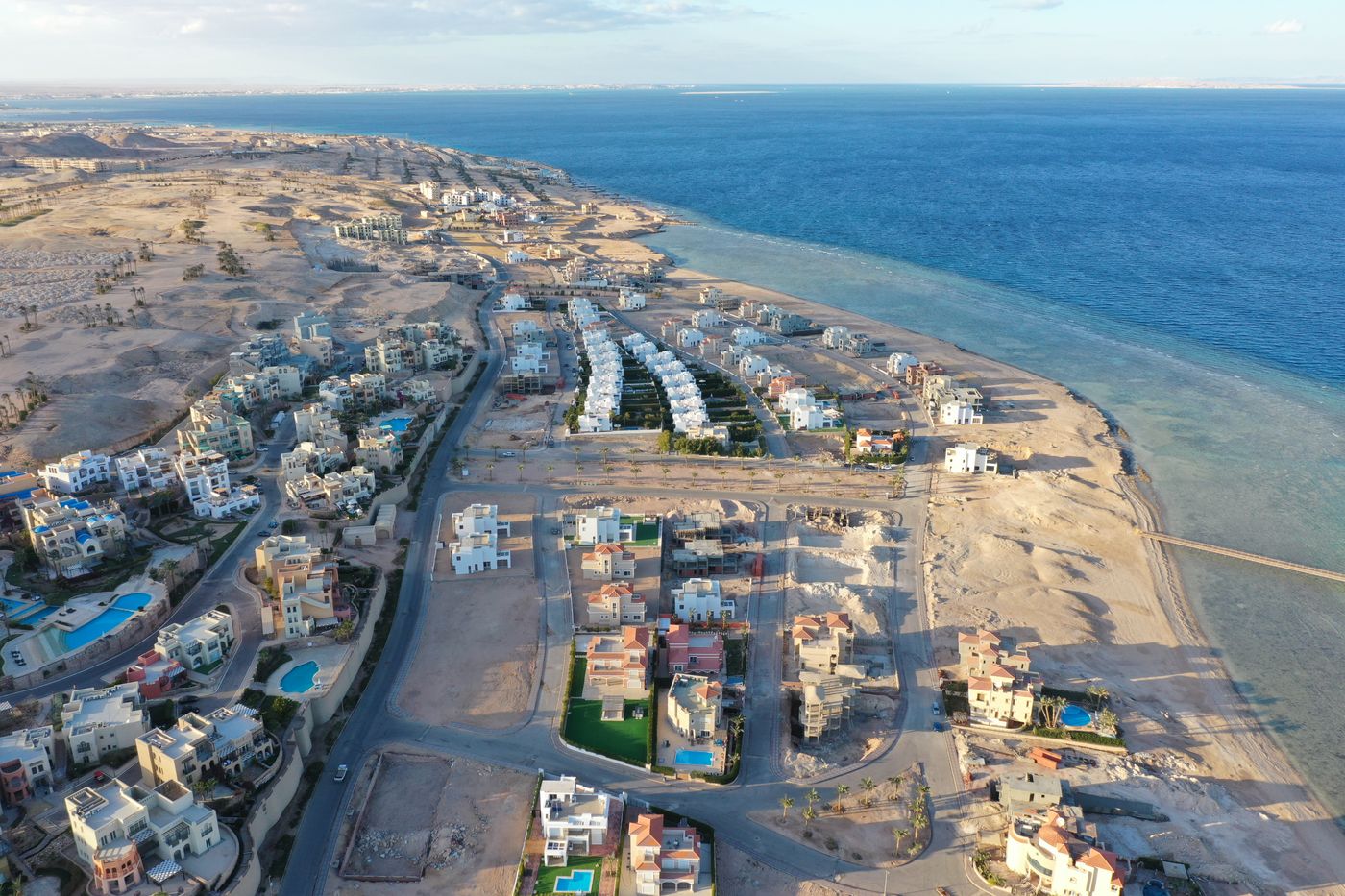
Winter in Hurghada is not winter as most of Europe knows it. While it is dark and cold at home, the Red Sea coast has mild, sunny days, a sea that is still swimmable and a north wind that keeps coming back. That makes December and January a popular time for a kite week — especially over Christmas and New Year. Here is what the weather is really like and how to plan it well.
The short answer
You can kitesurf in Hurghada in December and January, and many people learn here in winter. Expect wind on several days a week rather than every day, pleasant sunshine and cooler water than in summer. Book a full week, choose a proper wetsuit, use bigger kites on lighter days and keep a plan or two for calm days.
Wind in December and January
Windfinder’s long-term records from the Hurghada Airport station (2000–2026) give both December and January an average of about 11 knots, mostly from the north-northwest. That is the same as November and a little below the summer months, June to September, at about 14 knots.
Remember that these are 24-hour averages: they include calm nights and mornings, and the wind you ride around midday is usually stronger. A kite travel guide that summarises Windguru, Windy and Windfinder data counts roughly 50% of December days and 55% of January days as “windy” (at least three daylight hours of 4 Beaufort or more). The same guide calls November to April the off-season, with less consistent wind but still kiteable days, at least three to four a week. Treat these numbers as a rough guide, not a promise.
Air, sea and sun
- Air: about 21–23 °C in the day, 10–16 °C at night (long-term averages from weather2travel and Windfinder). January is a little cooler than December.
- Sea: about 23–24 °C in December and 22–23 °C in January.
- Rain: almost none — the averages show no rainy days and 0–1 mm in the month.
- Sun: about 9 hours of sunshine a day; the UV index is moderate (4–5), but on the water you still need sun protection.
In the sun and out of the wind it feels like a warm spring day. In the wind and in the evening it is cool, so dress in layers.
Daylight: the shortest days of the year
December has the shortest days. On 1 December 2026 the sun rises in Hurghada at about 06:17 and sets at about 16:50; around 21 December the day is about 10 hours 25 minutes long. In January the evenings slowly get longer: sunset is about 17:02 on 1 January 2027 and about 17:25 on 31 January.
- Book lessons for late morning and early afternoon, when the wind is usually best and there is light left.
- If you ride on your own, be back on the beach well before sunset — it gets cold quickly after the sun goes down.
- Use early mornings for breakfast, a walk or stretching instead of waiting on the beach.
What to wear
With water at 22–24 °C and a cool breeze, a summer shorty is not enough for most people, especially for long sessions.
- In the water: a 4/3 mm full wetsuit is the safe choice; some riders also use neoprene boots or a hood on windy days. Courses include a wetsuit, so you do not need your own for lessons.
- On the beach: a windproof jacket, a warm hoodie or fleece and long trousers for the late afternoon.
- For the evenings: a warm layer — nights can drop to about 10–12 °C in January.
- Sun: SPF 50 for the face, lip balm with SPF and sunglasses with a strap.
The full list is in our packing guide.
Learning in winter
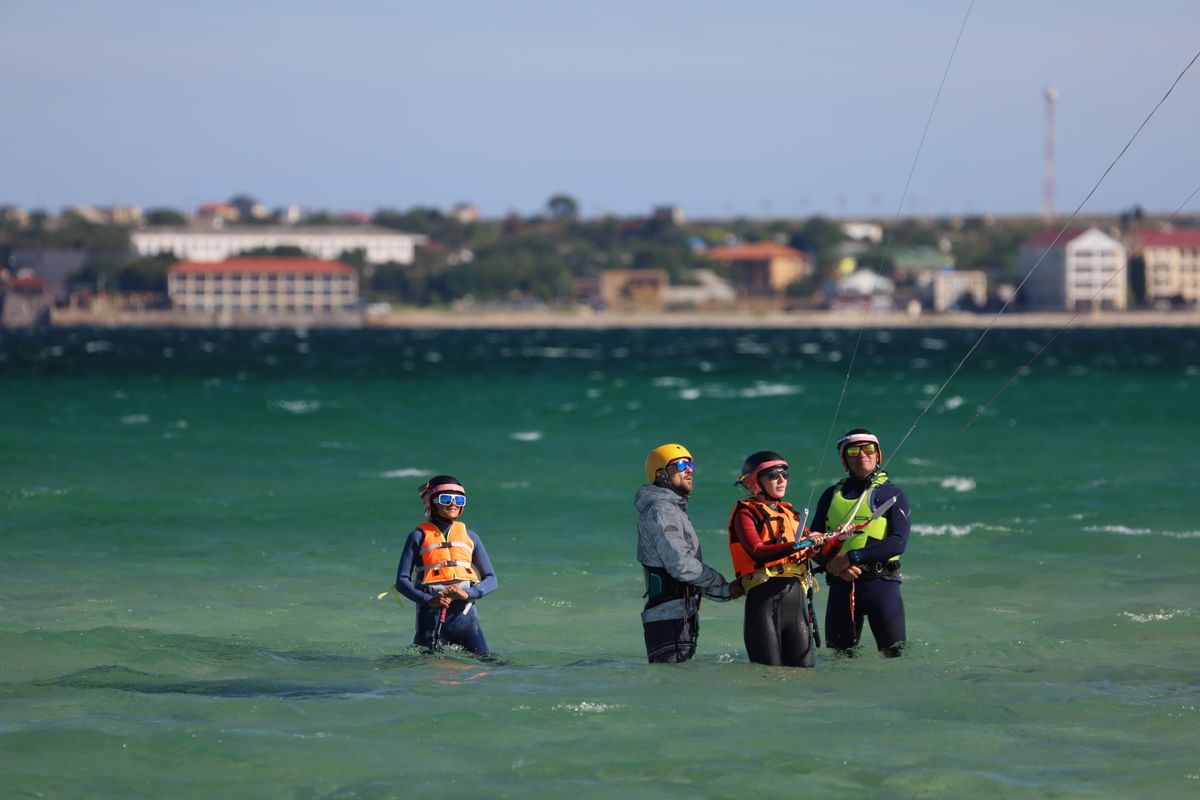
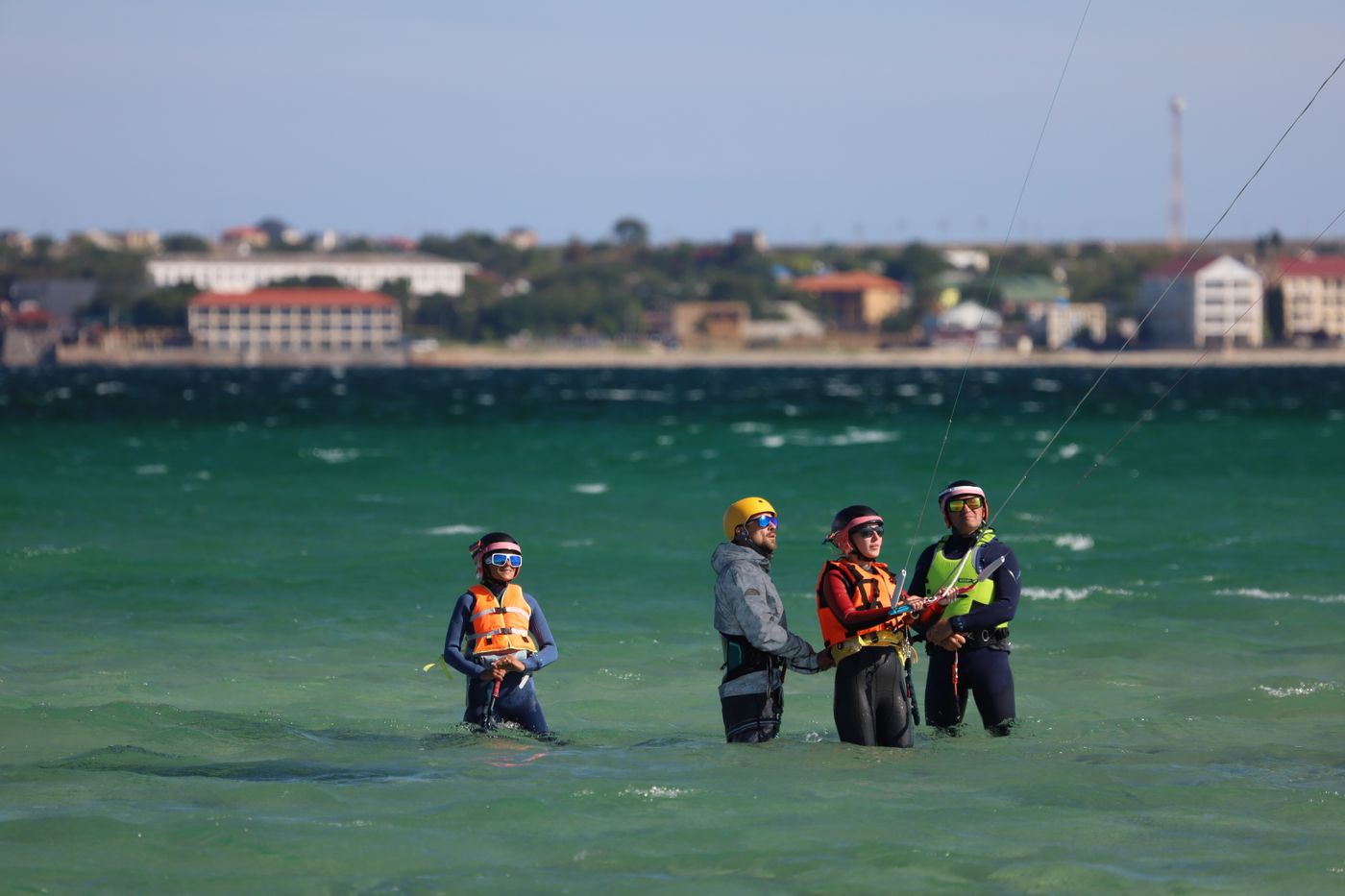
You can start kitesurfing in winter. Moderate, steady wind is good for first lessons, and the shallow, flat water in Al Hilal lets you stand up whenever you need to. The cooler water is the main difference: a good wetsuit and shorter breaks between sessions keep you comfortable. Most people need about 9–12 hours of lessons to ride on their own, 2–3 hours a day.
- Advanced course, 9 hours: about €290 in a group or €380 private, per person — usually 3–4 days of lessons.
- Advanced course, 12 hours: about €390 in a group.
- All equipment is included: kite, board, harness, wetsuit, vest and a radio helmet.
If a day is calm, the school moves your lesson to a windier slot or another day — another reason to book a full week. See all options on the Courses page.
For independent riders
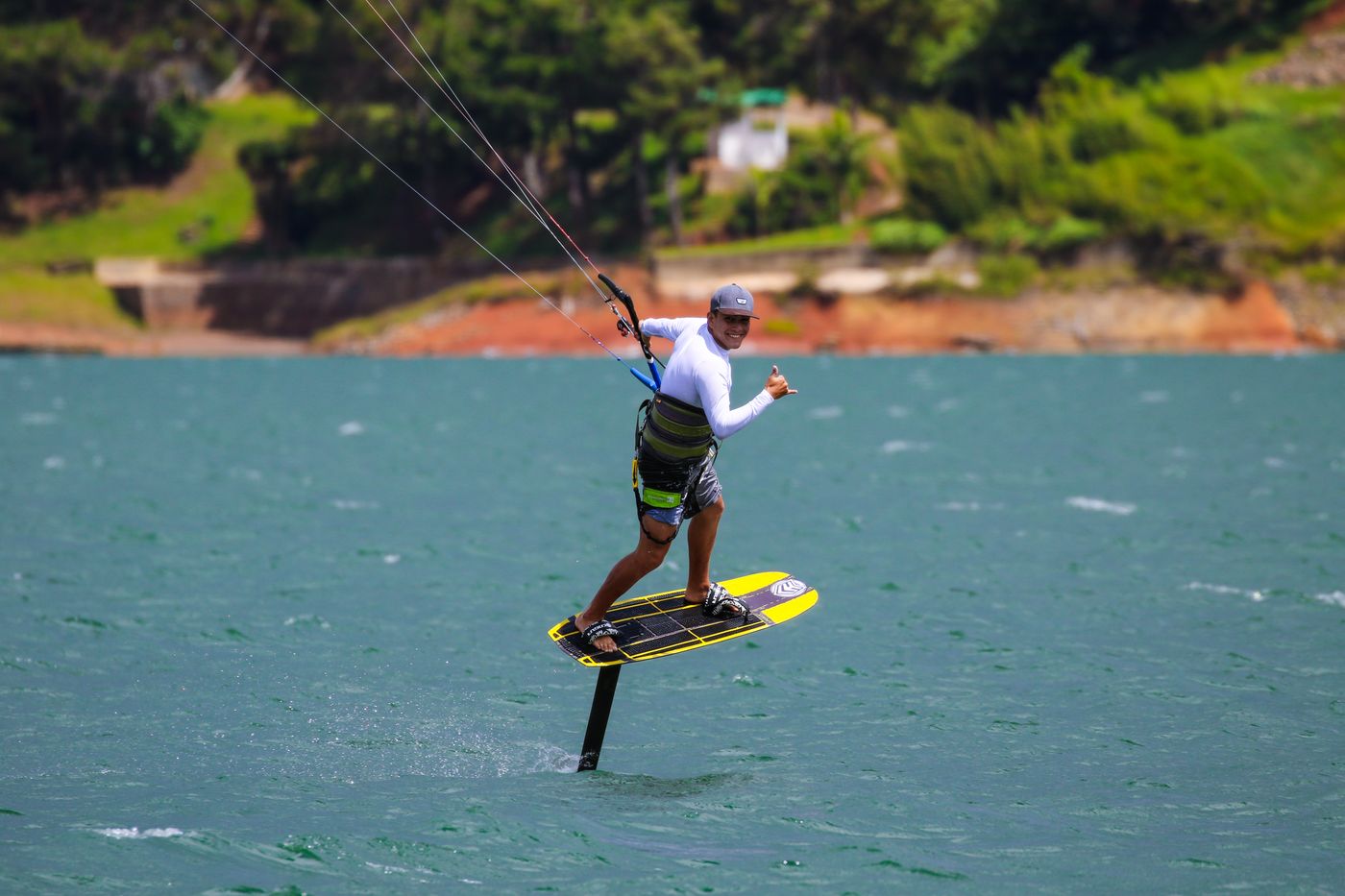
If you already ride, bring or rent a bigger kite for winter — guides for this spot suggest 12 m and up for lighter days, or a foil board. Rental is about €75 a day or €400 for a week. Wing foil is another good way to use moderate days: about €75 for a 1-hour lesson, €220 for 3 hours, or €100 a day for rental gear.
In winter you do not chase strong wind — you make the most of every good day.
Christmas and New Year
Many people travel to the Red Sea over the holidays. Prices on our site do not change by month, but rooms, lessons and airport transfers are limited, so it is worth sending your request early and confirming the dates on WhatsApp before you buy flights. If you want a quieter week, early December and mid to late January are good choices.
What to do on a calm day
- On the water: windsurf on a big board, SUP, or a wing foil session if there is some breeze.
- Excursions: Giftun island with snorkelling and lunch (about €30), the Dolphin House boat trip (about €30), a desert quad safari with a Bedouin dinner (about €35) or a full day in Luxor (about €85) — winter is a comfortable time for Luxor. See the Excursions page.
- Rest: one easy day in the middle of a course helps more than you think.
A winter week: rough budget
A beginner week with a 9-hour group course, 7 nights at Al Dora Residence with breakfast (two sharing) and a return airport transfer comes to about €560 per person before flights. Our sample weeks start at about €490 per person, two sharing. All prices are indicative partner prices — you pay each partner directly in Hurghada.