Key takeaways
- From November to February the long-term average wind is about 11 knots over 24 hours, mostly from the north-northwest. Expect several kiteable days a week, not every day.
- November is the warmest (sea about 25–26 °C). December and January are the coolest and darkest. February brings longer days, but the sea is at its coolest, about 21–22 °C.
- A full wetsuit is the normal choice all winter: 3/2 mm in November, 4/3 mm from December to February. Courses include a wetsuit.
- Book a full week, use bigger kites or a foil on lighter days and keep a plan for a calm day.
Winter is when many people in Europe start dreaming of sun and wind. Hurghada is one of the closest places where you can kitesurf from November to February: the days are sunny, rain is rare and the north wind keeps coming back. But the four winter months are not the same. Here is how they compare, using long-term averages, so you can choose the right weeks.
The short answer
Yes, you can kitesurf in Hurghada all winter, and it is a good time to learn. The wind is lighter and less regular than in summer, the water is cooler and the days are shorter. With a full week, a proper wetsuit and the right kite size, most people get plenty of time on the water.
November to February, month by month
Long-term averages from Windfinder (wind and temperature, Hurghada Airport station), weather2travel (sea and sun) and sunrise-sunset.org (daylight):
- November: wind about 11 knots; air about 25–27 °C in the day and 16–20 °C at night; sea about 25–26 °C; sunset moves from about 17:00 to 16:50.
- December: wind about 11 knots; air about 21–23 °C, nights 12–16 °C; sea about 23–24 °C; the shortest days of the year, sunset around 16:50–17:00.
- January: wind about 11 knots; air about 19–21 °C, nights 10–14 °C; sea about 22–23 °C; sunset moves from about 17:00 to 17:25.
- February: wind about 11 knots; air about 21–22 °C, nights 11–16 °C; sea about 21–22 °C; sunset moves from about 17:26 to 17:45.
For more detail, read our guides to November and to December and January.
What the winter wind is like
Windfinder’s records from the Hurghada Airport station (2000–2026) give every month from November to February an average of about 11 knots, mostly from the north-northwest. That is a little below the summer months, June to September, at about 14 knots. These are 24-hour averages: they include calm nights and mornings, and the wind you ride around midday is usually stronger.
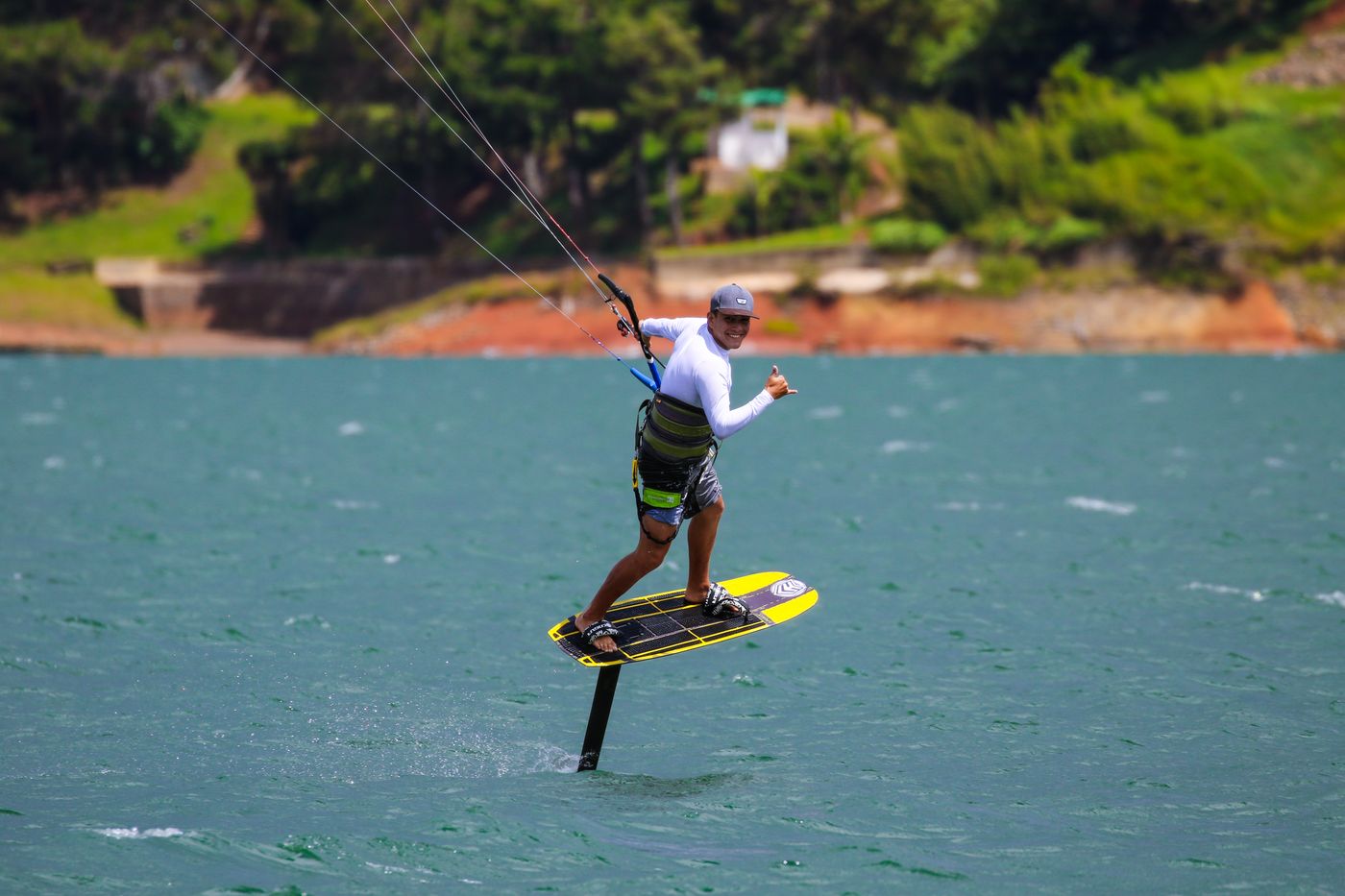
A kite travel guide for Hurghada calls November to April the off-season: the wind is less consistent, but there are still kiteable days, at least three to four a week. The same guide suggests bigger kites, 12 m and up, or a hydrofoil for lighter days. Treat all of this as a rough guide, not a promise — the weather in any single week can be windier or calmer.
Daylight: plan around the afternoon
Short days are the biggest difference from summer. The sun sets at about 16:50 in late November and December. After New Year the evenings slowly get longer: about 17:25 at the end of January and about 17:45 at the end of February, when the day is already about 11 hours 34 minutes long (Hurghada time, UTC+2).
- Plan lessons for late morning and early afternoon, when the wind is usually best and there is light left.
- If you ride on your own, be back on the beach well before sunset — it gets cool quickly once the sun goes down.
- February gives you almost an hour more light in the evening than December.
What to wear in each month
- November: a 3/2 mm full wetsuit or a long-sleeve shorty is usually enough; a light jacket for the evening.
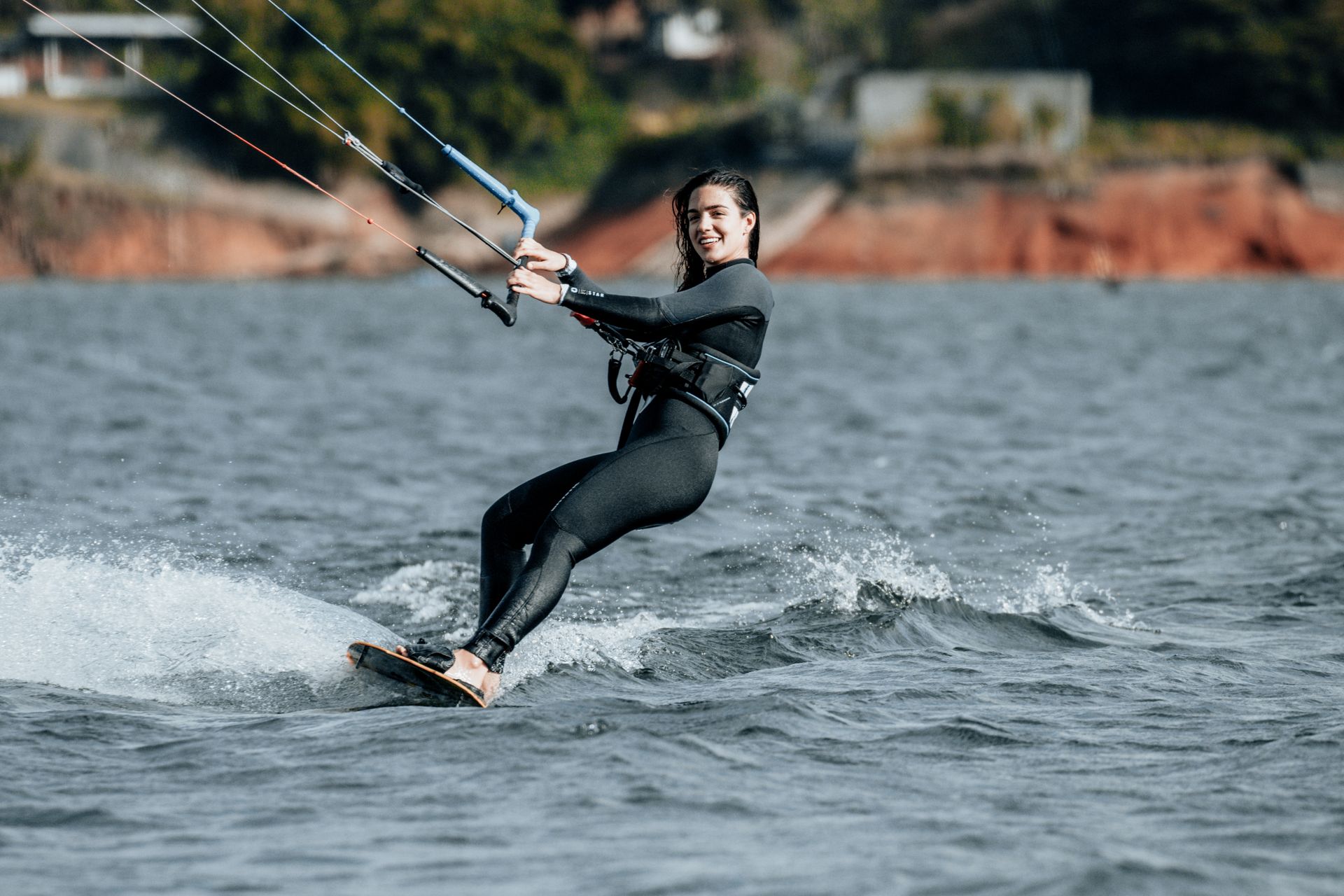
- December to February: a 4/3 mm full wetsuit is the safe choice, especially for long sessions; some riders add neoprene boots or a hood on windy days.
- On the beach: a windproof jacket, a warm hoodie and long trousers for the late afternoon.
- Sun: SPF 50 and sunglasses with a strap all winter — the UV index in February is already high.
Courses include a wetsuit, so you do not need your own for lessons. The full list is in our packing guide.
Learning to kite in winter
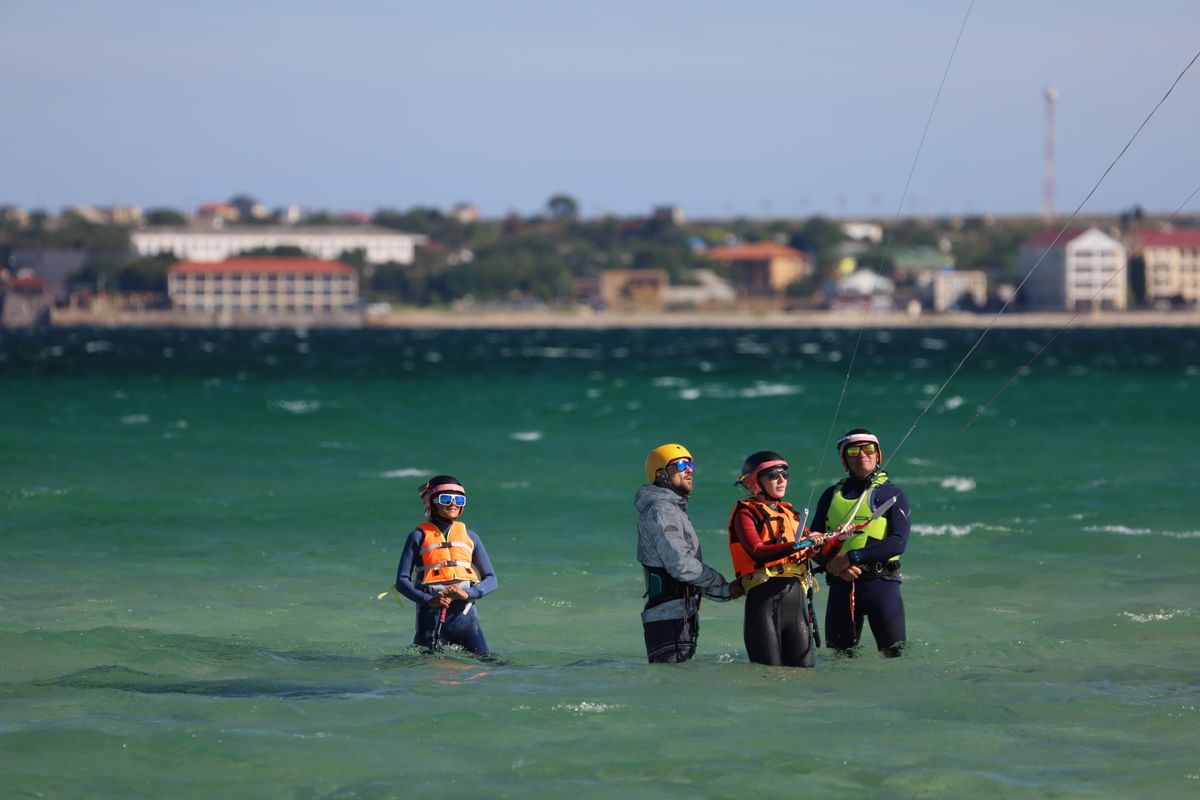
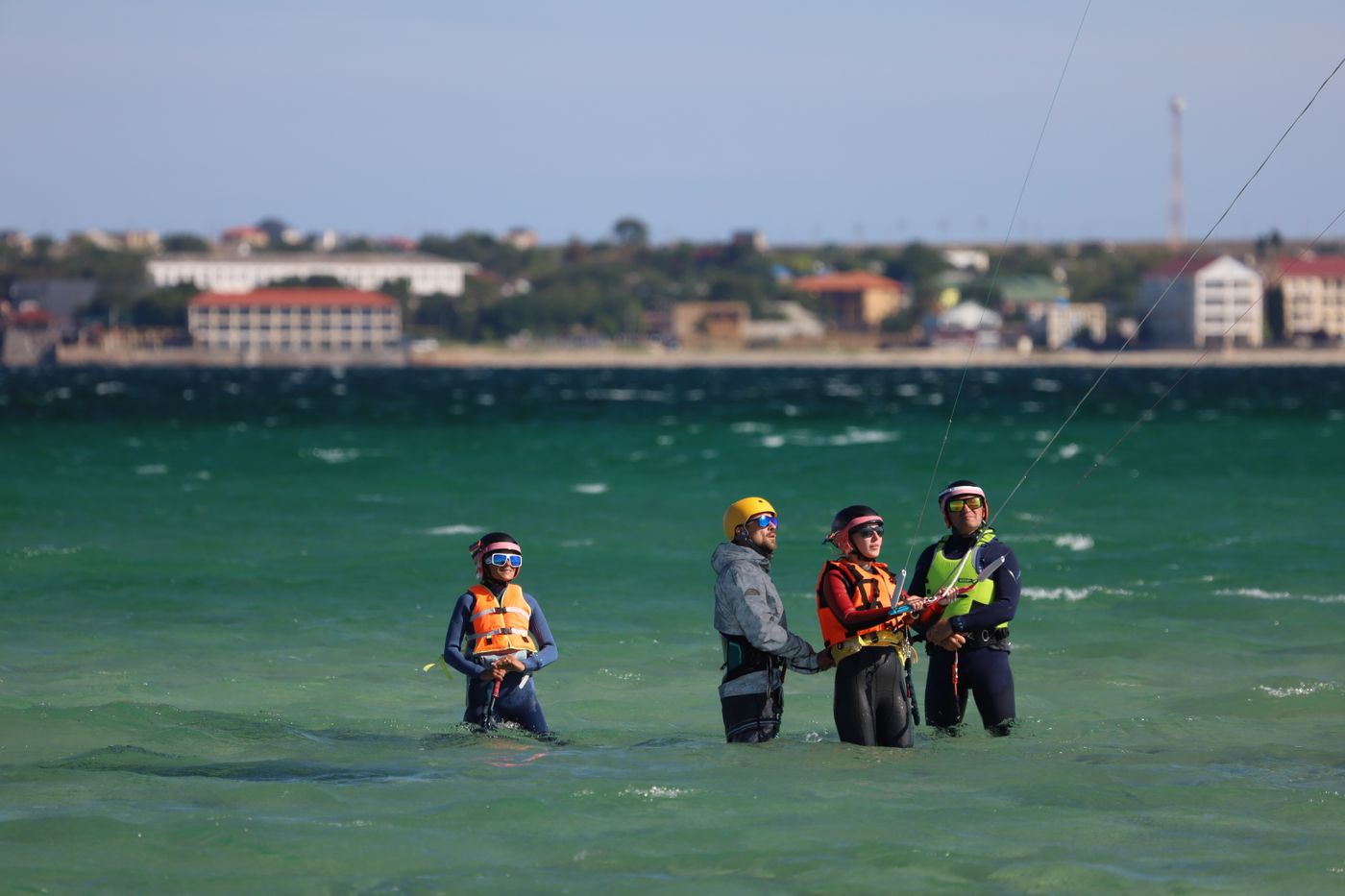
Winter is a good time to start. Moderate, steady wind suits first lessons, and the shallow, flat water in Al Hilal lets you stand up whenever you need to. Most people need about 9–12 hours of lessons to ride on their own, 2–3 hours a day.
- Advanced course, 9 hours: about €290 in a group or €380 private, per person — usually 3–4 days of lessons.
- Advanced course, 12 hours: about €390 in a group.
- All equipment is included: kite, board, harness, wetsuit, vest and a radio helmet.
If a day is calm, the school moves your lesson to a windier slot or another day. See all options on the Courses page.
For independent riders
If you already ride, a bigger kite matters more in winter than in summer. Rental is about €75 a day or €400 for a week. A foil board or a wing foil is another way to use lighter days: a wing lesson is about €75 for 1 hour or €220 for 3 hours, and rental gear is about €100 a day.
Which winter month to choose
- For the warmest water: November. The sea is still about 25–26 °C and the days feel like early summer.
- For the holidays: December. Christmas and New Year are popular, so send your request early and confirm dates on WhatsApp before you buy flights.
- For a quieter week: early December or mid to late January.
- For more light: February. The evenings are longer, but the water is the coolest of the year, so bring or use a good wetsuit.
Prices on our site do not change by month.
If the wind takes a day off
Winter is a comfortable time for trips away from the beach: Giftun island with snorkelling and lunch (about €30), the Dolphin House boat trip (about €30), a desert quad safari with a Bedouin dinner (about €35) or a full day in Luxor (about €85). See the Excursions page, and our article on what to do in Hurghada on a day without wind.
A winter week: rough budget
A beginner week with a 9-hour group course, 7 nights at Al Dora Residence with breakfast (two sharing) and a return airport transfer comes to about €560 per person before flights. Our sample weeks start at about €490 per person, two sharing. All prices are indicative partner prices — you pay each partner directly in Hurghada.